
01
Start with the vehicle
Pick the machine, and the gauge follows. Each card opens the store category that stocks it.
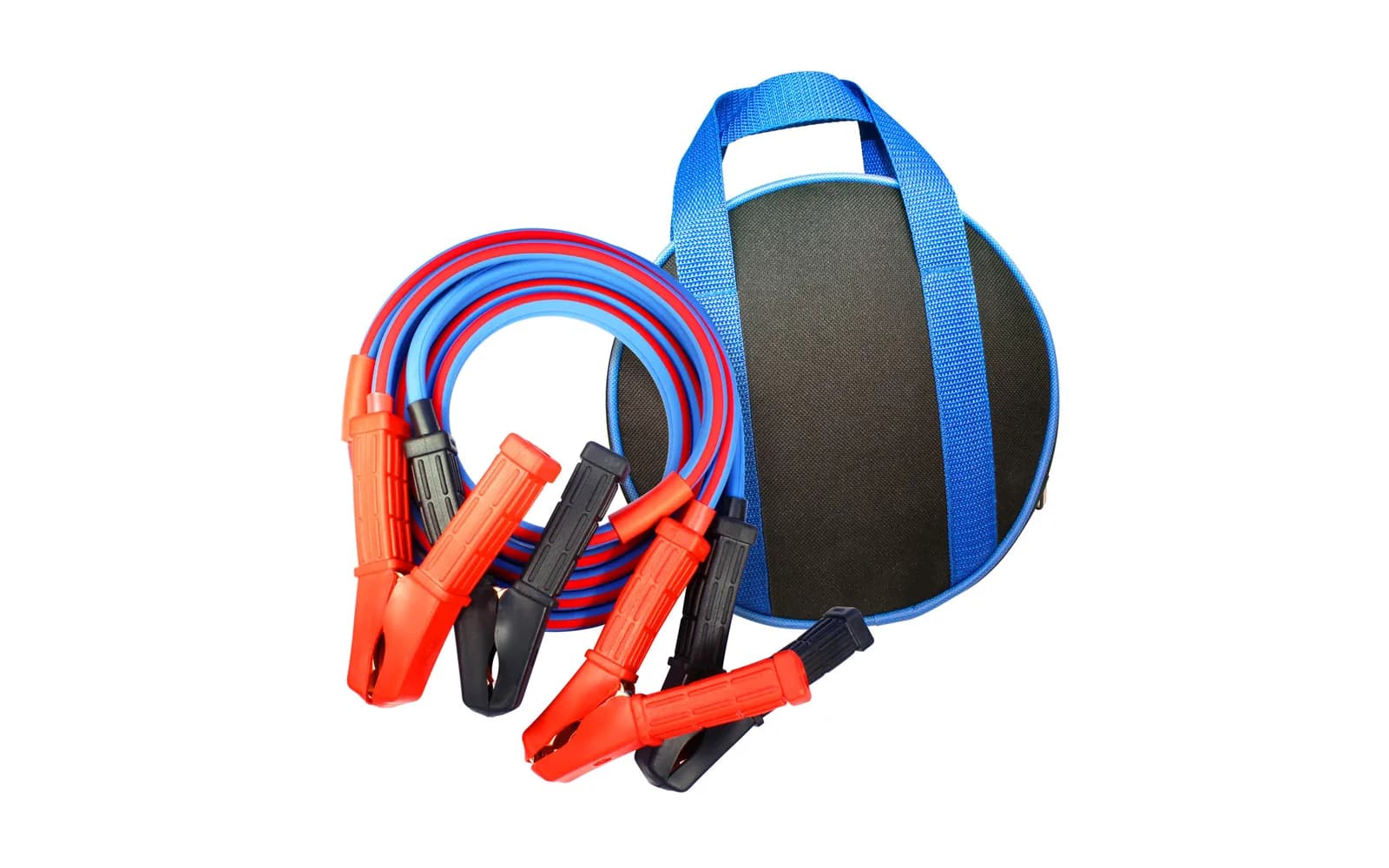
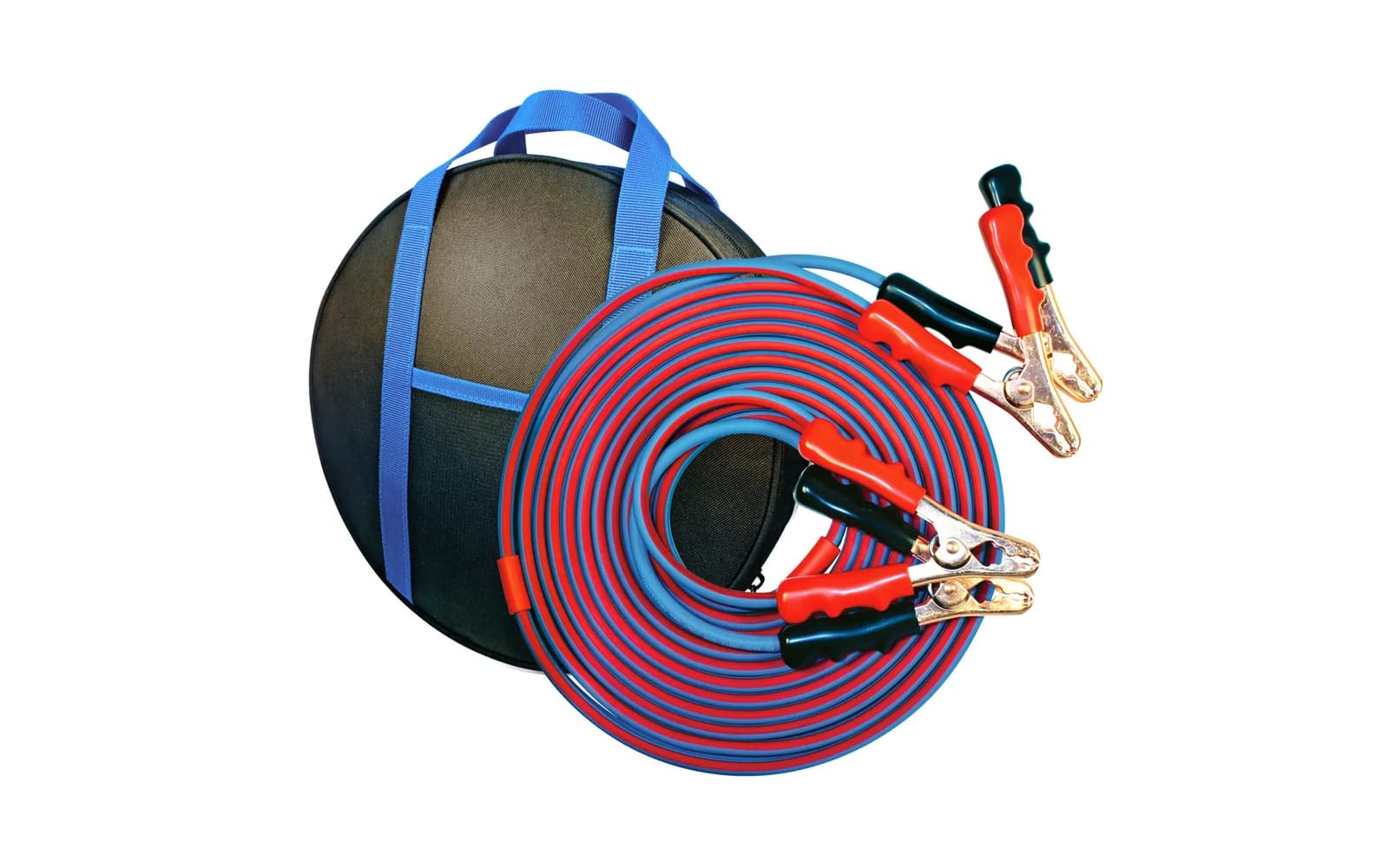
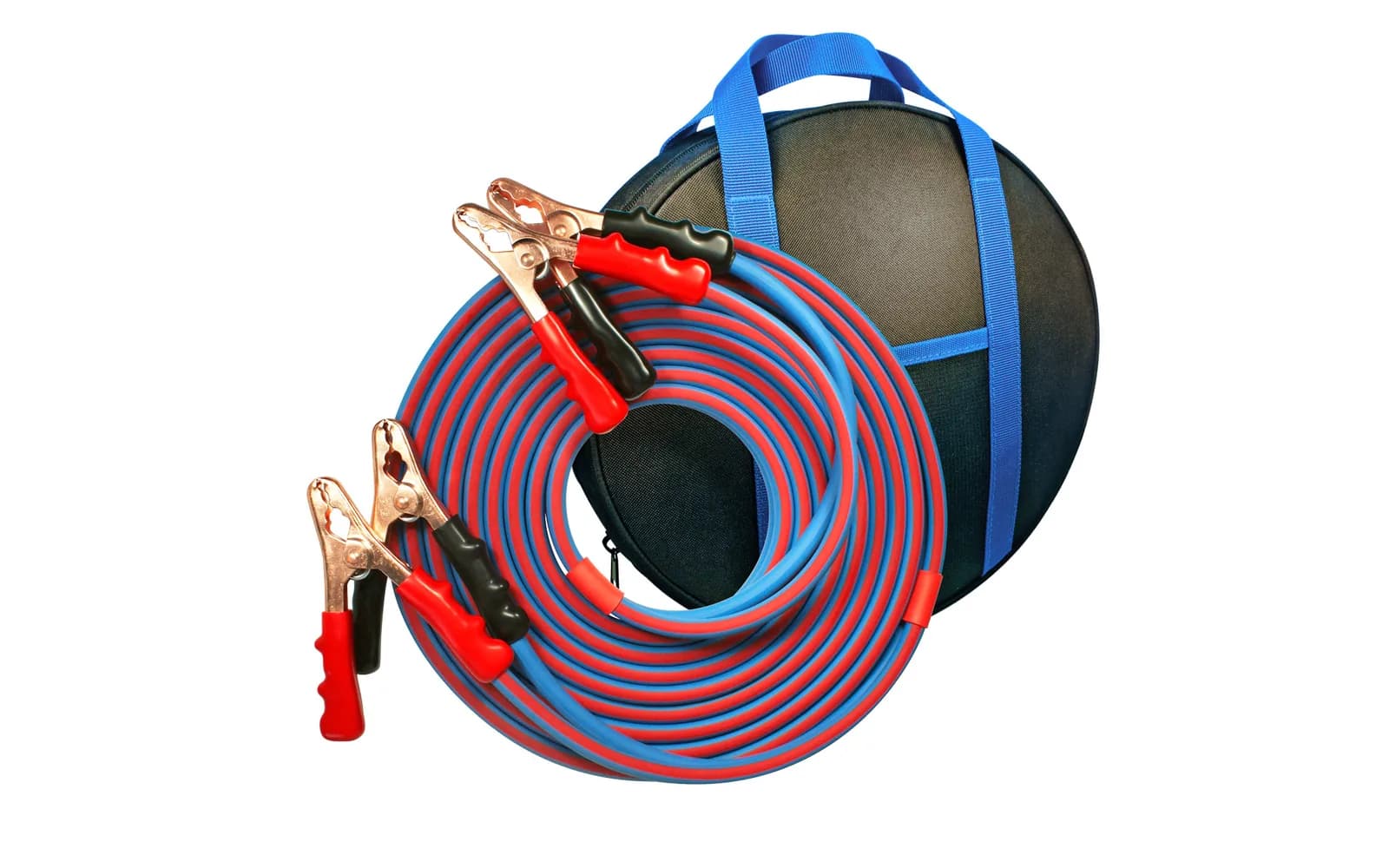
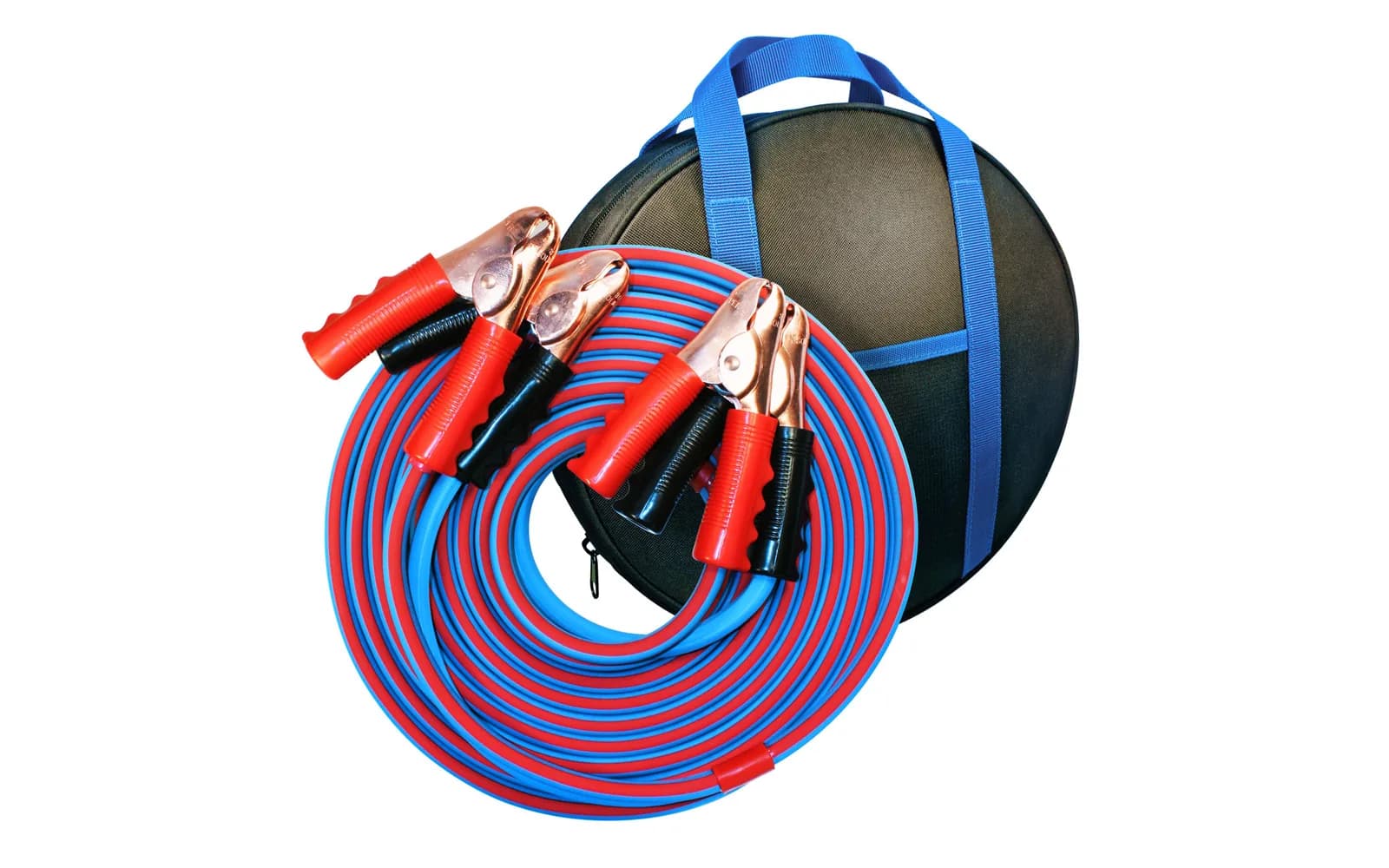
Pick the gauge from the vehicle, then check that the length you need exists in that gauge. Those two steps settle almost every jumper cable purchase, and the second one is where buyers get caught.
Polar Wire builds jumper cables in five gauges: 8 AWG, 6 AWG, 4 AWG, 2 AWG and 1/0. Every set is built from Arctic Superflex Blue, the all-copper double conductor wire Polar Wire manufactures itself. The table below is the whole decision in one place.
Part numbers, clamp fittings and every configuration Polar Wire builds are on the jumper and booster cable page. This guide is about which one to pick.
02
What gauge jumper cables do you need?
| Gauge | Vehicles | Clamp | Lengths clamp to clamp | Lengths with harness | Notes | Shop |
|---|---|---|---|---|---|---|
| 8 AWG | ATV, UTV, lawn tractor, farm equipment | 100 A solid copper | 8 ft | 6 ft, with a 1 ft harness | The shortest set made. Undersized for a car or a light truck. | ATV/UTV/Snowmobile |
| 6 AWG | ATV, UTV, lawn tractor, farm equipment | 100 A solid copper | 12 ft | 10 ft, with a 2 ft harness | Small engines, short reach. The longer of the two ATV and UTV sizes. | ATV/UTV/Snowmobile |
| 4 AWG | cars, light trucks | 400 A solid copper | 16, 20, 25 ft | 16, 20, 25 ft, with a 4 ft harness | The one-vehicle, one-set answer. Same 400 A clamp as 2 AWG, and the same 25 ft maximum clamp to clamp. Sold as premium grade. | Cars & Pickups |
| 2 AWG | trucks, heavy trucks, fleets | 400 A solid copper | 16, 20, 25 ft | 16, 20, 25, 30 ft, with a 4 ft harness | Same clamp and same clamp-to-clamp lengths as 4 AWG. It adds the 30 ft harness set, a heavy duty rating, and a 175 A fleet disconnect connector. | Trucks & Service Vehicles |
| 1/0 | heavy equipment | 1000 A dual live jaw | 20, 25, 30 ft | 25, 30 ft, with a 4 ft harness | The only real step up in clamp capacity. Both jaws carry current. | Commercial Heavy Duty |
Every gauge, length and clamp configuration is listed at store.polarwire.com/jumper-cables.
Read it by vehicle first. A lawn tractor and a wheel loader both start on a battery, and the cable that suits one is wrong for the other.
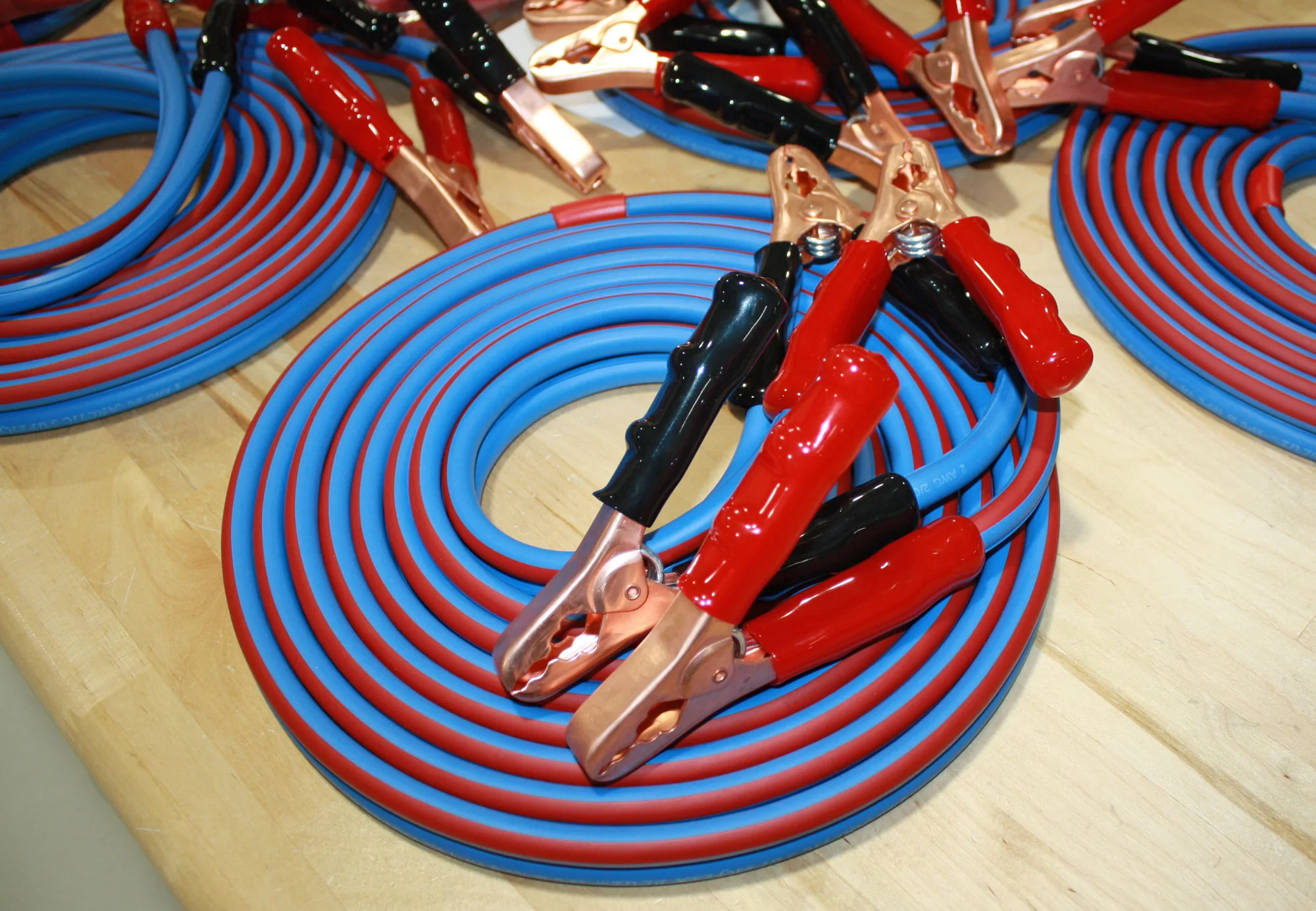
Two configurations run through the range, and they offer different lengths. A clamp-to-clamp set carries a clamp on all four ends. A clamp-to-harness set swaps the clamps at one end for a short harness that stays bolted to a battery.
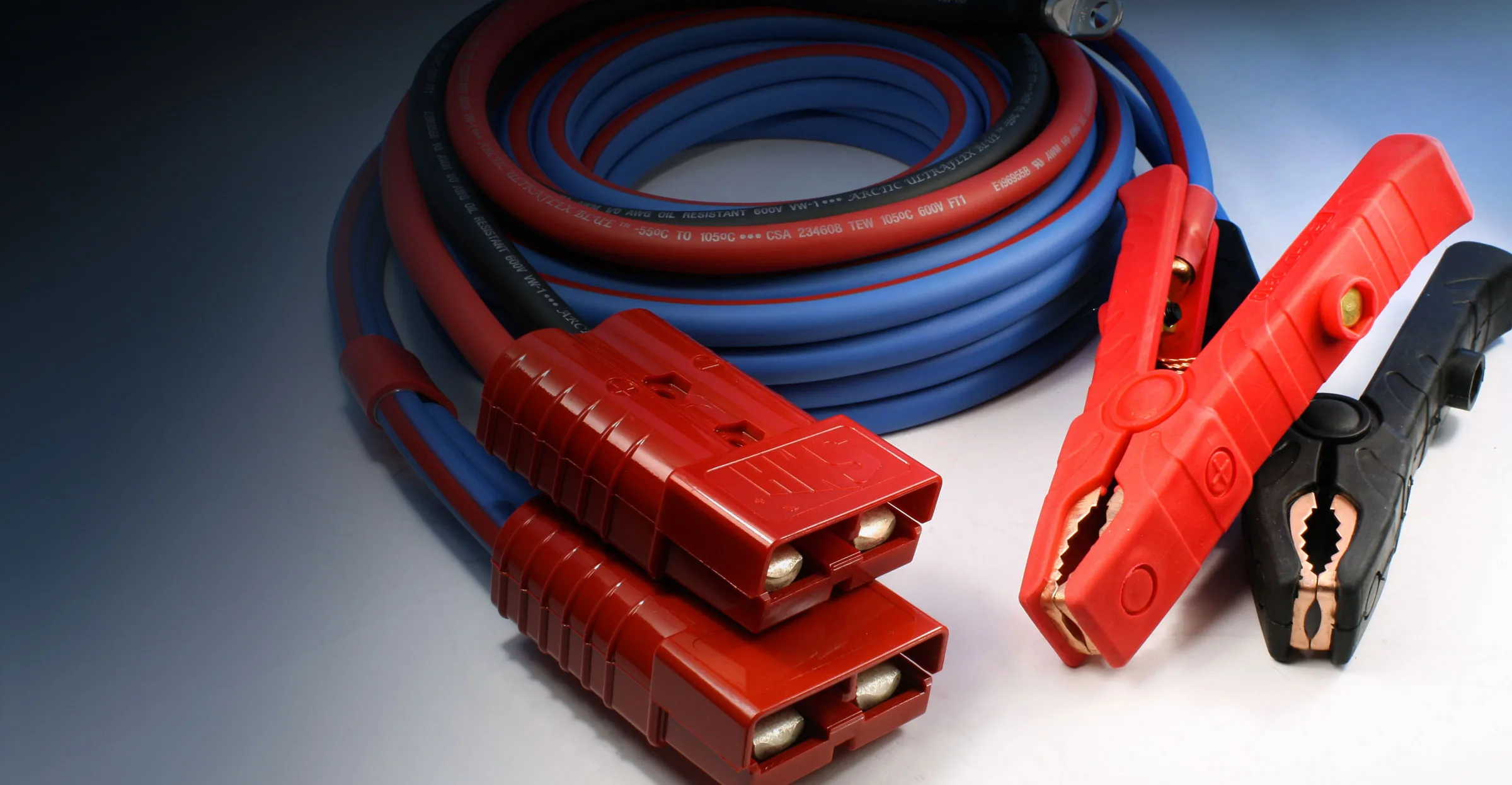
8 AWG covers ATVs, UTVs, lawn tractors and farm equipment, with 100 A solid copper clamps. Two sets are listed: 8 ft clamp to clamp, and 6 ft with a 1 ft harness.
6 AWG covers the same machines and the same 100 A clamps, at 12 ft clamp to clamp or 10 ft with a 2 ft harness. Small engines draw less starting current, and you can usually park right alongside the machine.
4 AWG is the car and light truck size: 400 A solid copper clamps, at 16, 20 and 25 ft, in either build. The harness sets carry a 4 ft harness. If you own one vehicle and want one set in the trunk, this is the answer.
2 AWG is for trucks, heavy trucks and fleets: the same 400 A solid copper clamps and the same 16, 20 and 25 ft clamp to clamp, plus a 30 ft harness set that 4 AWG does not have.
1/0 is for heavy equipment: 1000 A dual live jaw clamps, at 20, 25 and 30 ft clamp to clamp, and 25 or 30 ft with a harness. A braided copper bonding strap sends current to both jaws instead of one, which is what the rating depends on.
03
4 AWG or 2 AWG: what actually separates them
Put the two rows side by side and they sit almost on top of each other. Both carry the same 400 A solid copper clamp, so clamp rating tells you nothing about which one to buy. A comparison chart that leads with clamp amps is comparing the one thing these two sizes have in common.
Clamp on both sizes
400 A
Solid copper, identical on 4 AWG and 2 AWG. Clamp rating tells you nothing about which to buy.
Longest clamp to clamp, both sizes
25 ft
Made at 16, 20 and 25 ft in each gauge, so length is no help either.
Harness set, 2 AWG only
30 ft
With a harness on one end, 2 AWG is made to 30 ft where 4 AWG stops at 25 ft. This is the difference.
Clamp to clamp they are made in the same three lengths, 16, 20 and 25 ft, so length is no help either. One length does separate them: with a harness on one end, 2 AWG is made to 30 ft where 4 AWG stops at 25 ft.
That is 5 ft, and it decides the purchase when a harness sits on a battery you cannot park within 25 ft of. The two honest reasons to step up to 2 AWG are that 30 ft harness set and the duty rating behind it: the 4 AWG sets are sold as premium grade, the 2 AWG sets as heavy duty, with roughly 60 percent more copper in the conductor. For one vehicle and one set in the trunk, 4 AWG is the size. Only 1/0 is a real step up in clamp capacity, at 1000 A with the dual live jaw.
Why a longer cable needs thicker copper
Current leaving the good battery travels the full length of the cable, through the clamps, into the dead battery, and back again. Copper resists that flow slightly, and the resistance rises with the length of the run. What is lost on the way shows up as voltage drop: less arrives at the dead battery than left the good one.
Two things change it. Shorten the cable, or thicken it. Going from 4 AWG to 2 AWG adds roughly 60 percent more copper in cross-section, and more copper in the path means less is given up over the same distance. That is why the longest sets in the range are the thick ones, and why stretching a thin gauge to cover a long reach is the wrong trade.
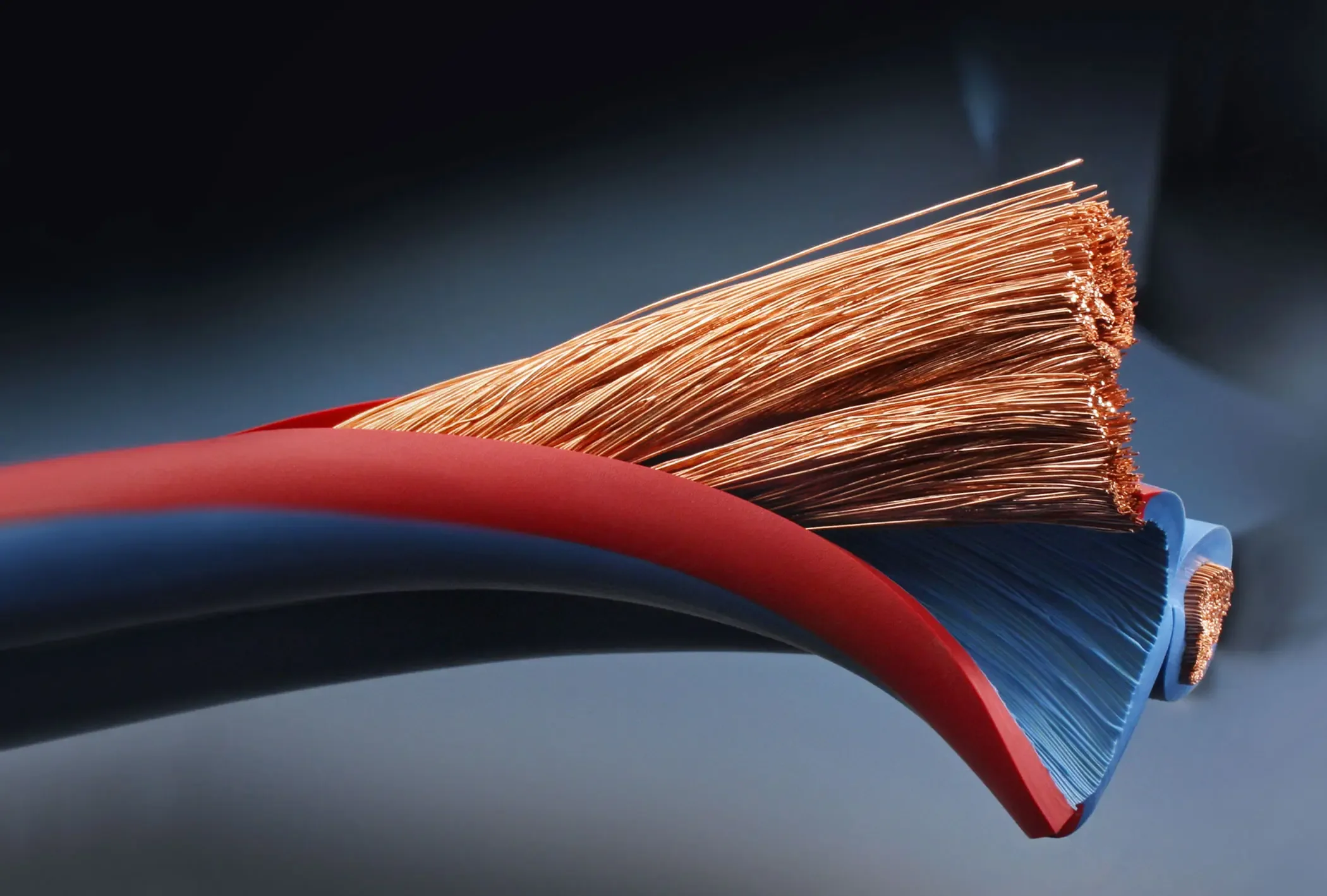
It is also why the longest harness set is 2 AWG. A tow operator or a service truck cannot always park nose to nose with the vehicle that died, and the 30 ft harness build exists in 2 AWG and in 1/0 only. The extra copper is what holds voltage over that run.
The margin matters most on a cold morning, and the cable is the part that copes best: copper conducts slightly better as it gets colder. The penalty falls at the two ends of the job. A cold battery delivers less current than a warm one and cold oil makes the engine harder to turn, so more is being asked at the moment less is available. Whatever the cable gives up comes off a reserve that is already thin.
04
What the clamp rating means
The amp figure on a clamp is how much current that clamp is built to pass. It describes the clamp rather than the set as a whole, which is why 4 AWG and 2 AWG carry the same 400 A clamp despite the difference in copper behind it. What the figure does tell you is that the clamp can pass what the job asks of it: a 100 A clamp on 1/0 would fall short. Polar Wire fits them the same way every time:
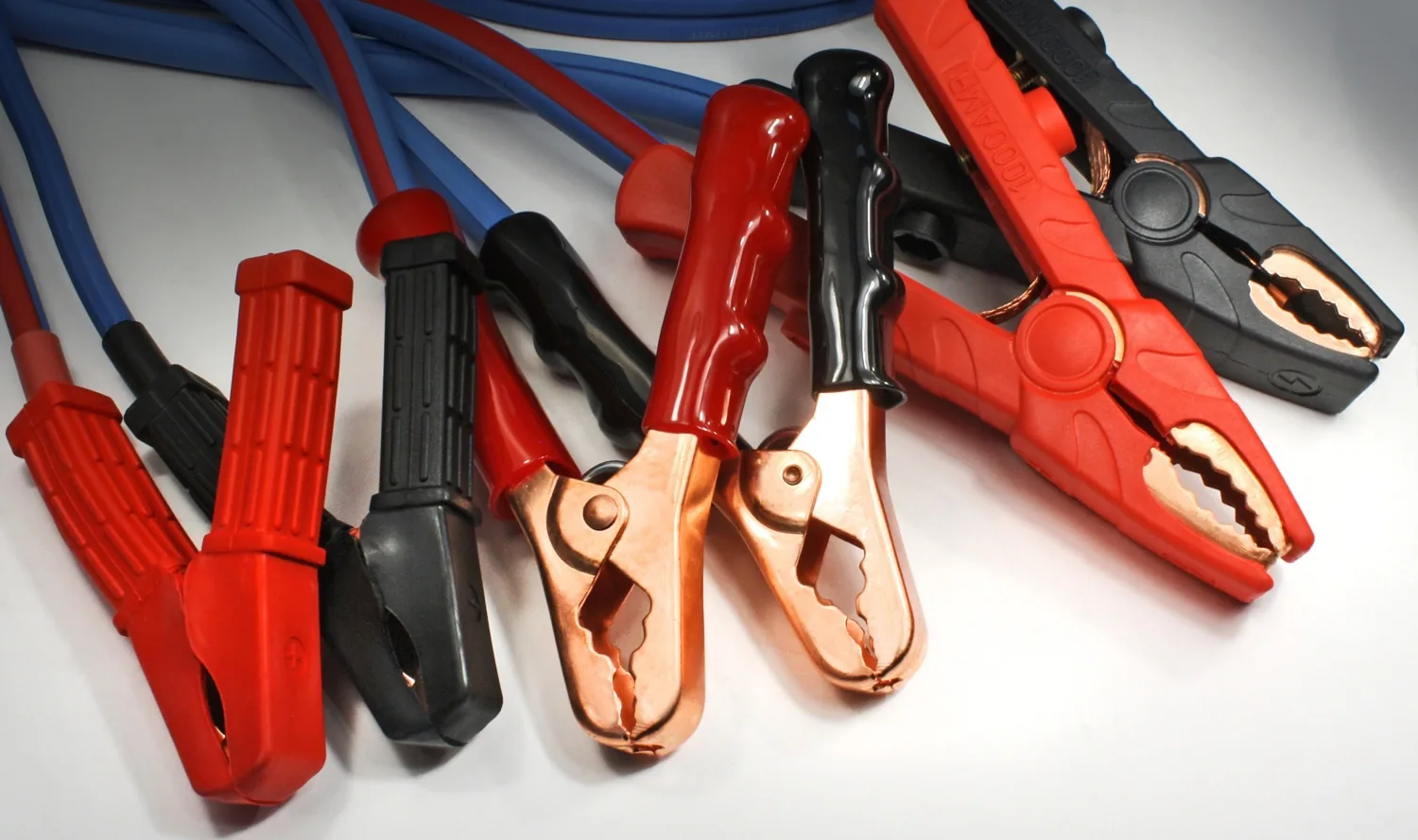
- 100 A copper clamps on 8 and 6 AWG, with full PVC insulation.
- 400 A heavy gauge copper clamps on 4 and 2 AWG, with heavy vinyl handle insulation.
- 1000 A dual live jaw clamps on 1/0, with full length overmolded PVC and a braided copper bonding strap feeding both jaws.
Insulation is red and black on every set, so polarity is readable at a glance in bad light. The jaws themselves are solid copper rather than copper-plated, which is the difference between a clamp that carries current through its whole body and one that carries it through a coating.
05
What gauge for a diesel truck or a semi?
- Diesel truck, semi or heavy truck
- 2 AWG
2 AWG. A diesel engine needs more current to turn over than a gasoline engine of the same size, because it has higher compression and no spark to help it, and that gap widens as the temperature falls. Cold oil is thicker, and a cold battery delivers less than a warm one, so the worst day of the year is the day the cable has to be right.
That combination is why a 4 AWG set that starts a car in a parking lot can struggle on a truck in a yard: more current is being asked for over a longer run, and both push the voltage drop the wrong way. 2 AWG answers both, with more copper behind the same 400 A clamps and a harness build that runs to 30 ft where 4 AWG stops at 25 ft. Above that sits 1/0, which is the size for earth-moving and off-road machinery rather than for road trucks.
06
How long should jumper cables be?
Measure the worst case, not the easy one.
Shortest set made
8 ft
8 AWG, clamp to clamp. Enough for a quad you can pull the other machine up to.
Longest clamp to clamp in 4 AWG and 2 AWG
25 ft
Nose to nose with room to spare, and it handles the curb, the wall and the car alongside.
Longest reach made
30 ft
1/0 clamp to clamp, and 2 AWG or 1/0 with a harness. For when the two cannot be lined up at all.
25 ft covers nose-to-nose parking with room to spare, and it handles the common awkward case where the dead vehicle sits against a curb, a wall or another car. It is also the longest clamp-to-clamp set made in 4 AWG and in 2 AWG. 30 ft is for when you cannot line the two vehicles up at all: a truck stuck in a bay, equipment in a yard, a car parked in nose-first with traffic behind it. It comes in 1/0 clamp to clamp, and in 2 AWG or 1/0 with a harness. 12 ft is enough for a quad or a tractor you can pull the other machine straight up to, and 8 ft is the shortest clamp-to-clamp set made.
Longer cable costs more and weighs more, because the price and the weight are mostly copper. Buy the reach you need and stop there.
Lengths by gauge, clamp to clamp: 8 AWG 8 ft, 6 AWG 12 ft, 4 AWG 16, 20 and 25 ft, 2 AWG 16, 20 and 25 ft, 1/0 20, 25 and 30 ft. With a harness on one end: 8 AWG 6 ft, 6 AWG 10 ft, 4 AWG 16, 20 and 25 ft, 2 AWG 16, 20, 25 and 30 ft, 1/0 25 and 30 ft.
07
Are jumper cables copper, and does it matter?
It matters more than anything else on the spec sheet.
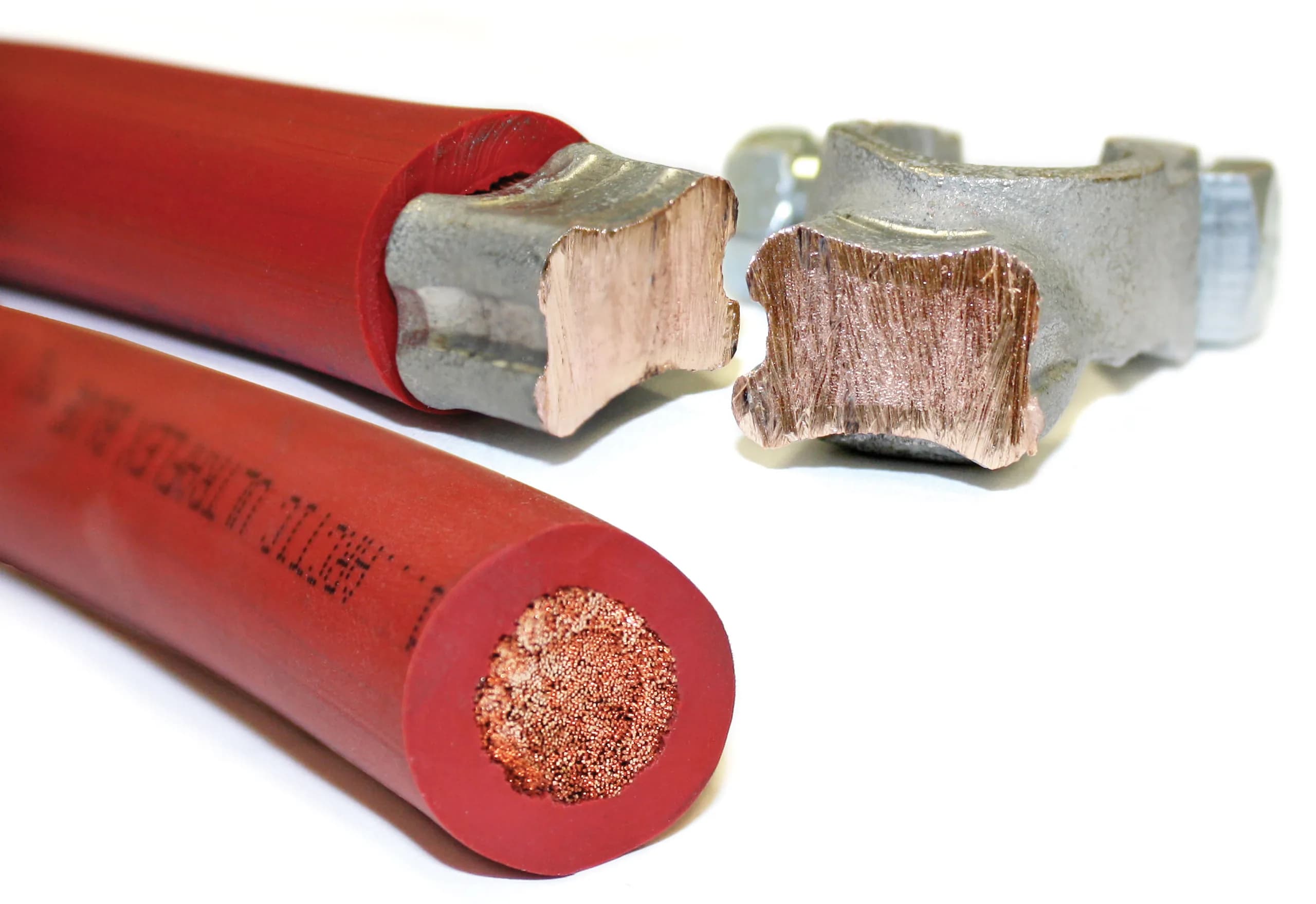
Some sets sold as copper are copper-clad aluminum: aluminum wire under a thin copper skin, which looks like copper at the cut end. Aluminum carries roughly 61 percent of the current copper does for the same cross-section, so a copper-clad cable behaves like a thinner cable than the gauge printed on the jacket.
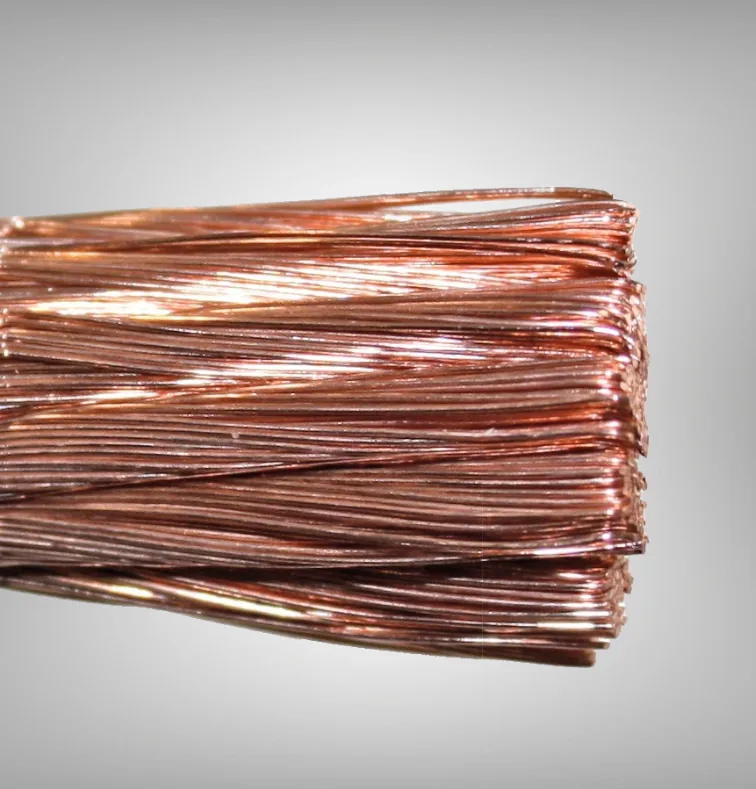
Polar Wire jumper cables use all-copper conductors and solid copper clamps. The conductor is Class K fine-stranded, at 420 strands per conductor in 4 AWG, 665 in 2 AWG and 1,064 in 1/0. Fine stranding is what keeps a heavy cable flexible enough to coil and stow in the cold.
Comparing two sets, check three things:
- Whether the conductor is copper or copper-clad aluminum.
- Whether the clamp jaws are solid copper or copper-plated.
- Whether the clamps are bolted to the cable or riveted. Bolted clamps can be replaced when one gets crushed. A riveted clamp cannot be swapped on its own.
Polar Wire clamps are bolted, and the solid copper lugs are crimped to the cable ends and sealed under adhesive-lined heat shrink, which keeps moisture, dirt and road salt out of the joint that carries the current.
08
What makes one set better than another
Four things, in order: conductor material, gauge, clamp, and length. Everything else is packaging.
There is one difference worth knowing that no spec sheet shows. Polar Wire manufactures Arctic Superflex Blue and then builds the jumper cable from it. Almost no competitor does both. Most cable brands buy wire in and assemble it, so the conductor is whatever a supplier shipped that month. Here the wire and the finished cable come out of the same company, under ISO 9001 compliant processes. The wire page publishes the stranding, the diameters and the stocked sizes for every gauge in the range.
Across 137 products the company holds 286 customer reviews averaging 4.96 out of 5, and they concentrate on these jumper cables.
Limited Lifetime Warranty
Every jumper cable set Polar Wire builds carries the Limited Lifetime Warranty seal. It covers the finished assembly rather than wire sold by the foot, it is identified per product by the seal shown on that product page, and it runs to the original buyer.
Anchorage is head office and customer support. Illinois is the factory, where everything is made and ships from.
09
Where to buy jumper cables, and what they cost
Buy direct at store.polarwire.com/jumper-cables, which is sorted by vehicle in the same order this guide is:
- ATV, UTV and snowmobile for 8 and 6 AWG.
- Cars and pickups for 4 AWG.
- Trucks and service vehicles for 2 AWG.
- Commercial heavy duty for 1/0.
Every length and clamp configuration in a gauge sits on that gauge's category page, with current pricing.
Price tracks gauge and length for the same reason weight does. Copper is most of the cost, so an 8 ft 8 AWG ATV set and a 30 ft 1/0 heavy equipment set sit at opposite ends of the range. Decide the gauge from the vehicle and the length from where you park, then read the price for that combination, rather than shopping on price first and finding out the set is undersized when you need it.
5% off online jumper cable purchases
Buy any jumper cable set on the Polar Wire store to take 5% off. Runs through December 31, 2026.
Shop jumper cables10
Buying for a fleet, a shop or a service truck
Past a set or two, configuration matters as much as gauge. Clamp-to-harness sets leave a short harness bolted permanently to a hard-to-reach battery, so the cable plugs straight in instead of hunting for terminals under a deck or behind a panel. It is also where the longest reach lives, at 30 ft in 2 AWG and in 1/0. Spare harnesses are sold on their own, so one cable can serve a whole yard.
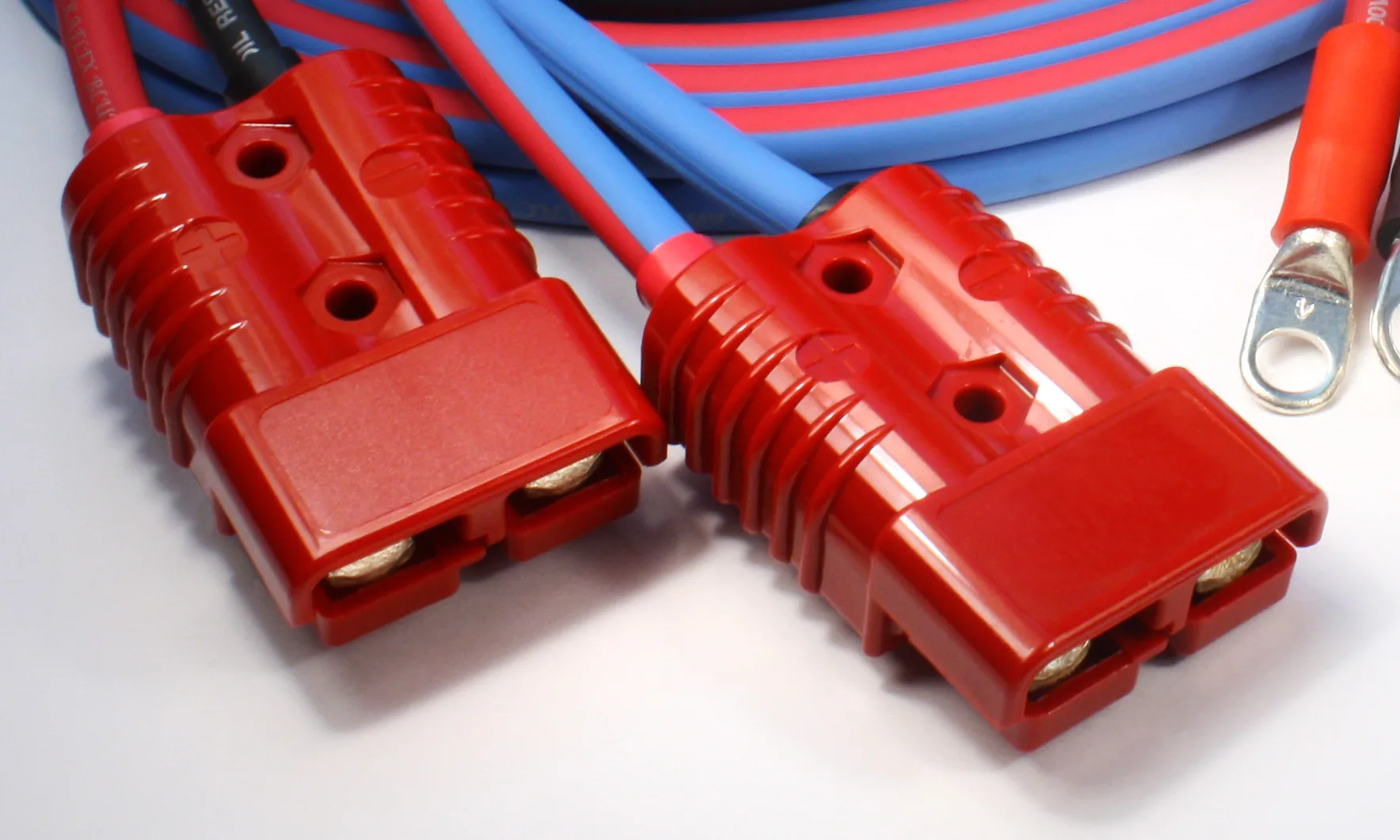
Fleets start at trucks and service vehicles. That one category holds the whole 2 AWG range, the 30 ft harness set, the plug-to-plug connector cables, and a 175 A fleet disconnect connector alongside the 400 A clamps.
Heavy equipment usually takes the SAE J1283 jump start connector, whose plug shape rules out a cross-polarity connection. Those sit under commercial heavy duty with the 1/0 sets, and the ratings, the adaptor configurations and what the plug fits are set out on the SAE J1283 jump start cable page.
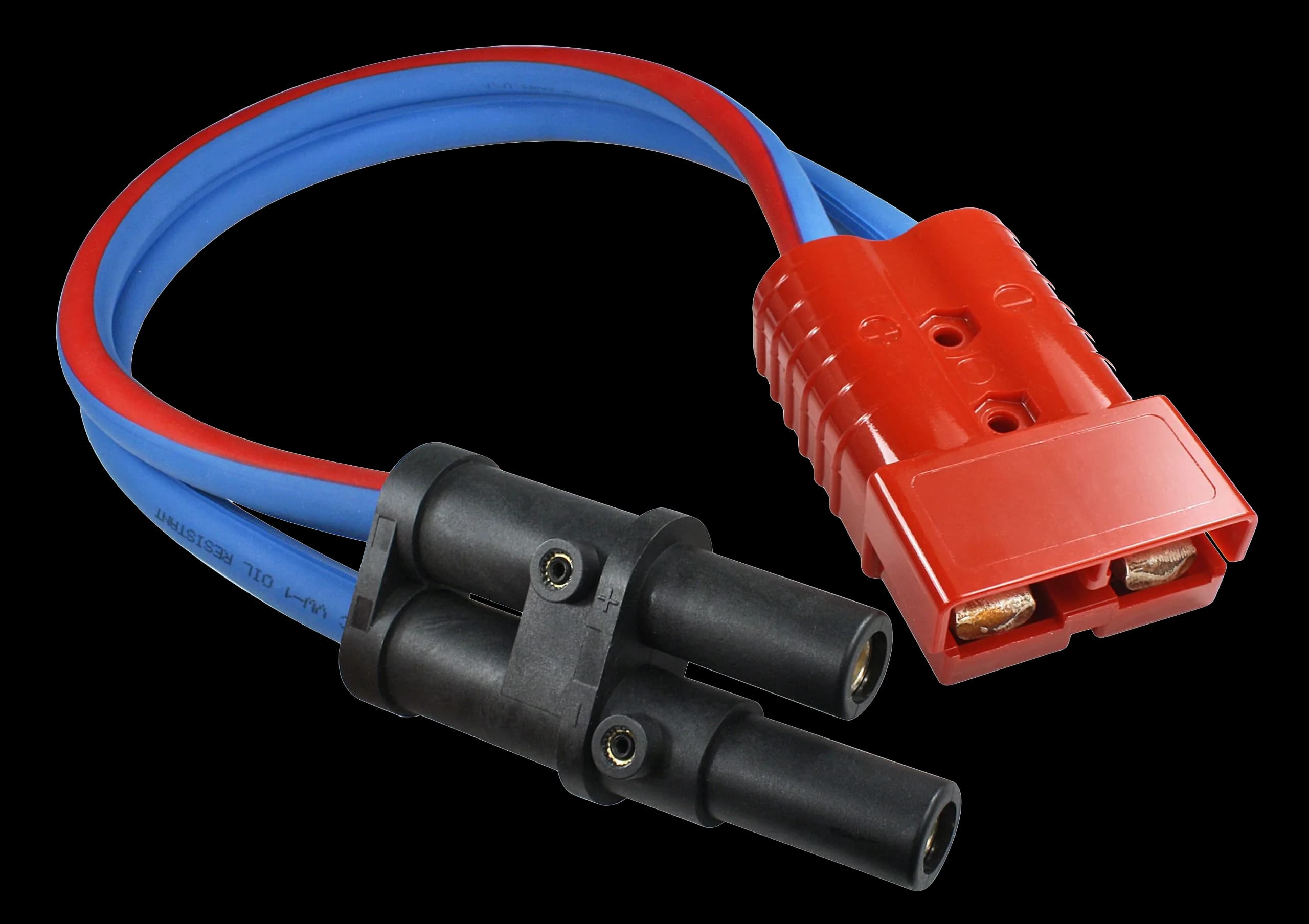
Small orders, under 50 assemblies, ship within 10 days on average. For custom lengths, mixed configurations or private label work, talk to the team.
11
Frequently asked questions
How much are jumper cables?
Price tracks gauge and length, because both are mostly copper. An 8 ft 8 AWG ATV set and a 30 ft 1/0 heavy equipment set sit at opposite ends of the range. Decide the gauge from the vehicle and the length from where you park, then read the price for that combination. Current prices for every gauge, length and clamp configuration are listed at store.polarwire.com/jumper-cables.
Where to buy jumper cables?
Polar Wire sells direct at store.polarwire.com/jumper-cables, sorted by vehicle: ATV, UTV and snowmobile for 8 and 6 AWG, cars and pickups for 4 AWG, trucks and service vehicles for 2 AWG, and commercial heavy duty for 1/0. Lengths run to 30 ft. The cables are made in Illinois and ship from there. Anchorage is head office and customer support.
Are jumper cables copper?
Some are. Others sold as copper are copper-clad aluminum, which is aluminum wire under a thin copper skin and looks like copper at the cut end. Aluminum carries roughly 61 percent of the current copper does for the same cross-section, so a copper-clad cable behaves like a thinner cable than its stated gauge. Polar Wire jumper cables use all-copper conductors and solid copper clamps.
What are the best jumper cables?
The best set is the one sized to the vehicle. Judge four things: conductor material, gauge, clamp rating and length. All copper beats copper-clad aluminum, and bolted clamps beat riveted ones because a crushed clamp can be replaced. Polar Wire manufactures Arctic Superflex Blue wire and then builds the cable from it, which almost no competitor does. Across 137 products the company holds 286 customer reviews averaging 4.96 out of 5, concentrated on these jumper cables.
Where can I buy heavy-duty jumper cables?
For trucks, heavy trucks and fleets the heavy-duty size is 2 AWG, at store.polarwire.com/jumper-cables/trucks-service-vehicles: 400 A solid copper clamps, 16, 20 and 25 ft clamp to clamp, and 16, 20, 25 or 30 ft with a 4 ft harness. For heavy equipment it is 1/0, at store.polarwire.com/jumper-cables/commercial-heavy-duty, with 1000 A dual live jaw clamps and lengths to 30 ft. Both are built from Arctic Superflex Blue and made in Illinois under ISO 9001 compliant processes.
What are jumper cables made of?
A jumper cable is two insulated conductors, one red and one black, with a clamp fixed to each end. Polar Wire builds them from Arctic Superflex Blue, a Class K fine-stranded all-copper double conductor wire it manufactures itself. Solid copper lugs are crimped to the cable ends and sealed under adhesive-lined heat shrink, then bolted to solid copper clamp jaws so a damaged clamp can be replaced.
How much copper is in jumper cables?
It depends on the gauge, and the difference is large. Arctic Superflex Blue is Class K fine-stranded, with 420 strands per conductor at 4 AWG, 665 at 2 AWG and 1,064 at 1/0. Conductor cross-section roughly doubles every three AWG steps, so 2 AWG carries about 60 percent more copper per foot than 4 AWG. Copper-clad aluminum cables carry far less copper than their gauge suggests.
Where do I find jumper cables with 4-gauge wire?
4 AWG sets are at store.polarwire.com/jumper-cables/cars-pickups. 4 AWG is the car and light truck size: 400 A solid copper clamps, at 16, 20 and 25 ft, clamp to clamp or with a 4 ft harness. 2 AWG carries the same clamp and the same three clamp-to-clamp lengths, so moving up a gauge buys copper rather than reach. The only longer sets are the 30 ft harness build in 2 AWG, and 1/0.
What gauge wire are jumper cables?
Gauge is stated in AWG, and a lower number means thicker copper. Polar Wire builds five gauges: 8 and 6 AWG for ATVs, UTVs, lawn tractors and farm equipment; 4 AWG for cars and light trucks; 2 AWG for trucks, heavy trucks and fleets; and 1/0 for heavy equipment. Thicker copper carries more current and loses less of it over the length of the cable.
Are 8 gauge jumper cables good?
For small engines, yes. 8 AWG is sized for ATVs, UTVs, lawn tractors and farm equipment, paired with 100 A solid copper clamps, in two sets: 8 ft clamp to clamp, and 6 ft with a 1 ft harness. Both are at store.polarwire.com/jumper-cables/atv-utv-snowmobile. Those machines draw less starting current and you can usually park right alongside them. For a car or a light truck, 8 AWG is undersized and 4 AWG is the size to buy.
Are 2 gauge jumper cables good?
2 AWG is the size for trucks, heavy trucks and fleet vehicles. It uses the same 400 A solid copper clamps as 4 AWG and the same clamp-to-clamp lengths, 16, 20 and 25 ft. Two things separate it: the harness build adds a 30 ft set where 4 AWG stops at 25 ft, and 2 AWG is sold as heavy duty against premium grade, with roughly 60 percent more copper. For one car kept in a garage, 4 AWG does the job and is lighter to stow.
What's the difference between 2 gauge and 4 gauge jumper cables?
Clamp rating is identical: both carry 400 A solid copper clamps, and clamp to clamp both are made at 16, 20 and 25 ft. The difference is copper and one length. 2 AWG has roughly 60 percent more conductor cross-section than 4 AWG, so it holds voltage better over a long run, and with a harness it is offered to 30 ft where 4 AWG stops at 25 ft. Cars and light trucks take 4 AWG. Trucks, heavy trucks and fleets take 2 AWG.
Buy jumper cables direct
Every gauge, length and clamp configuration, with current pricing.